Telehealth brands need demand. That part is obvious. The harder part is building demand without turning every campaign into a risk magnet. A promotion plan can look strong on the surface: paid ads are running, email campaigns are scheduled, social content is live, landing pages are converting, and the team is moving fast. Then the cracks appear. Claims drift. Messaging becomes inconsistent. Creative pushes harder than the evidence can support. Tracking gets added without enough planning. What started as a growth plan becomes a messy collection of promotional activity.
That is why a promotion plan matters in telehealth. It is not just a campaign calendar or a list of offers. It is the operating system that defines what the brand can say, where it should say it, how channels should work together, and how performance should be measured without creating unnecessary privacy or claims risk.
In telehealth, promotion has to sit between growth ambition and disciplined execution. The FTC’s health advertising guidance emphasizes that health-related claims should be truthful, not misleading, and supported by appropriate evidence. FDA materials on prescription drug promotion also emphasize accurate, balanced communication where prescription drug advertising is involved. HHS guidance on online tracking technologies adds another layer for regulated health environments, especially when digital tools collect information about how users interact with websites or apps.
This article is not legal or medical advice. It is a strategic framework for building telehealth promotion plans that support demand generation, clearer communication, privacy-aware measurement, and more durable growth.
Telehealth promotion does not fail because teams lack ideas. It fails when demand outruns claim discipline.
Key Takeaways
- A promotion plan for telehealth should define campaign goals, message boundaries, channel roles, and measurement rules before campaigns go live.
- Strong promotion does not depend on exaggerated claims. It depends on clarity, trust, education, and expectation alignment.
- Claims can drift across ads, landing pages, emails, and lifecycle messages when teams do not govern messaging centrally.
- PHI and health-adjacent data require careful handling in tracking, audience activation, attribution, and reporting workflows.
- The strongest promotion plans connect demand generation to acquisition quality, retention, payback, and operational readiness.
What a Promotion Plan Means in Telehealth
A promotion plan is the structured roadmap a brand uses to drive demand around a specific offer, service line, campaign, season, audience segment, or growth objective. In telehealth, that roadmap has to do more than organize campaign dates. It has to control message quality, claim consistency, channel sequencing, privacy-aware measurement, and economic discipline.
That is the difference between a promotion plan and a random promotional activity. Random activity asks, “What can we launch this week?” A real promotion plan asks, “What demand are we trying to create, what can we responsibly say, which channels should carry the message, and how will we know whether this demand is actually valuable?”
Promotion is also different from advertising. Advertising is one execution layer. Promotion includes the broader system: paid media, organic content, email, landing pages, lifecycle messages, partnerships, webinars, offers, launch sequences, and follow-up communication. It decides how the market hears the message, not just where the media dollars go.
Telehealth promotion needs more claim discipline because the category sits closer to sensitive health decisions than ordinary consumer marketing. A vague claim in another industry may be annoying. A vague claim in telehealth can create the wrong expectations, attract poor-fit demand, or make the brand’s growth system harder to govern. The goal is not to make messaging boring. The goal is to make it clear enough to convert without drifting into promises the company should not make.
Why Telehealth Promotion Plans Break
Telehealth promotion plans usually break before the campaign launches. The issue is not always bad creative or weak media buying. More often, the planning system is too loose.
Teams chase urgency before clarity. They want stronger hooks, faster conversion, more aggressive offers, and shorter paths to action. That pressure is understandable, especially when acquisition costs are rising. But urgency without clarity creates fragile demand. Users may click because the message feels compelling, but then drop off when the landing page, intake flow, or follow-up does not match the expectation.
Claims also drift across touchpoints. The paid ad says one thing. The landing page sharpens it. The email simplifies it. A social post adds emotional language. A lifecycle message rephrases it again. Nobody intends to create inconsistency, but the campaign slowly becomes a game of telephone with a budget attached. Truly inspirational. Also terrible.
Channel teams can also optimize before messaging is governed. Paid social may test hooks. Search may test copy. Email may test subject lines. Content may test angles. Without a shared message hierarchy, each team starts improving its own metrics while weakening the overall story. The brand gets more efficient at saying slightly different things in slightly different places.
Measurement gets messy when privacy is not planned early. In telehealth, teams should be careful around tracking, attribution, audience building, and reporting design. HHS guidance on online tracking technologies specifically addresses how tracking tools collect and analyze website or app interactions in regulated health contexts. State privacy laws also continue to evolve, making it harder for brands to rely on one static playbook for data practices.
The Core Components of a Strong Promotion Plan
A strong telehealth promotion plan should be specific enough to guide execution and flexible enough to improve with performance data.
- Campaign objective and audience fit: The plan should define what the promotion is supposed to accomplish and who it is built for. Awareness, lead generation, conversion, reactivation, and retention campaigns should not use the same message or success criteria.
- Message hierarchy and claim boundaries: Teams need a clear structure for primary message, supporting points, proof, exclusions, and language to avoid. This keeps creatives from freelancing their way into trouble.
- Channel sequencing: Search, social, SEO, lifecycle, and retargeting should carry different parts of the promotion. The plan should define what each channel is responsible for instead of forcing one message everywhere.
- Landing page alignment: The landing page should continue the same promise the campaign introduces. It should reduce confusion, set expectations, and avoid stretching claims for the sake of conversion rate.
- Review and measurement workflow: Promotion planning should include creative review, claim review, analytics review, and privacy-aware measurement design before launch, not after the campaign starts acting weird.
How to Drive Demand Without Risky Claims
Driving demand without risky claims starts with accepting an uncomfortable truth: stronger claims are not always stronger marketing. Sometimes they just create louder problems.
Telehealth brands can often create more durable demand by leading with clarity. Users need to understand who the service is for, what problem the brand helps them navigate, what the next step looks like, and what they should not assume. Clear messaging does not reduce conversion power. It improves the quality of the people who convert.
Education also matters. Many telehealth users are not ready to act from one ad or one landing page. They may need context, comparison, reassurance, process clarity, or practical explanation before they move forward. Educational promotion helps the brand build trust before asking for action. That can improve acquisition quality without leaning on exaggerated claims.
Benefits should be specific without overpromising. A strong promotion plan can describe convenience, access, process simplicity, support, speed of navigation, or care model structure, where accurate. It should avoid implying guaranteed outcomes, universal fit, or unsupported superiority. The FTC’s health products guidance states that health-related claims should be truthful, not misleading, and supported by science. In prescription drug contexts, the FDA’s OPDP describes its role as helping ensure promotion is truthful, balanced, and accurately communicated.
Internal review should be built into the promotion process. That does not mean every campaign needs to move at the speed of a fax machine in 1998. It means teams should define review checkpoints before launch so creative, compliance, growth, and analytics are not fighting fires after the ads are already live.
How Channels Fit Into a Telehealth Promotion Plan
A promotion plan should not treat every channel as a megaphone. Different channels should carry different jobs.
SEO supports education and durable demand capture. It is useful for explaining the category, answering user questions, and building trust before conversion. In a promotion plan, SEO can support both current campaigns and long-term demand by giving users a place to understand the offer more deeply.
Paid search supports high-intent demand. It reaches users who are already looking for something related to the category or solution. That makes it useful for conversion-focused promotion, but only when the keyword strategy, copy, and landing page stay aligned. Search can look efficient while still attracting weak-fit demand if the message is too broad.
Paid social supports awareness, message testing, and demand creation. It is often where brands learn which angles attract attention. But attention is not the same as qualified demand. A paid social promotion should be judged by the quality of users it brings into the funnel, not just by click-through rate or cost per lead.
Email and lifecycle channels support progression and retention. They help continue the conversation after the first interaction. In telehealth, this matters because users often need more context before they take the next step or stay engaged over time.
Retargeting can support recovery, but it should not be the foundation. A promotion plan that depends too heavily on retargeting may be hiding weak messaging earlier in the funnel. In privacy-sensitive categories, teams should be especially careful about how retargeting audiences are defined, how tracking is configured, and whether the data use is appropriate for the context.
Metrics That Matter in a Promotion Plan
Promotion performance should not be judged only by engagement. Engagement is useful, but it can also reward the wrong behavior.
Demand quality matters more than surface-level activity. A campaign that generates high traffic but poor progression is not a win. A message that gets clicks but creates confusion is not effective. A promotion that lowers cost per lead while reducing downstream quality is just efficiency theater with nicer charts.
CAC, retention, and payback logic should influence promotion decisions. Telehealth brands should ask whether a campaign brings in users who justify the acquisition cost over time. If a promotion attracts short-lived or poorly aligned demand, the economics will eventually expose it.
Claim-safe creative performance is another useful lens. The best-performing creative should not be evaluated only by cost metrics. It should also be assessed for clarity, expectation quality, and consistency with approved messaging. Creative that wins by stretching meaning is not really winning. It is borrowing risk from the next quarter.
Privacy-conscious attribution also matters. Promotion plans should define what data is needed, what can be measured in aggregate, and where the team should avoid unnecessary complexity. A clean reporting model that supports good decisions is better than a sprawling system that collects signals the business cannot responsibly govern.
Common Promotion Plan Mistakes in Telehealth
The same promotion mistakes tend to show up again and again.
- Treating promotion as a last-minute campaign push: When planning starts too late, teams rush messaging, skip alignment, and launch campaigns that are harder to govern.
- Letting creative outrun claim review: Creative teams need room to test, but message boundaries should be clear before hooks go live.
- Using one message across every channel: Search, social, SEO, email, and retargeting do different jobs. They should not all carry the same version of the message.
- Optimizing for clicks instead of qualified demand: Strong engagement can hide weak-fit traffic, poor expectations, or low downstream value.
- Adding more tracking when the real issue is weak planning: More data does not fix unclear messaging, poor channel sequencing, or a landing page that confuses people professionally.
Why Telehealth Promotion Needs More Than Campaign Execution
Telehealth brands rarely struggle because they cannot launch campaigns. They struggle because promotion is disconnected from the rest of the growth system.
Campaign execution can drive activity. It cannot guarantee trust, quality, retention, or sustainable economics. Promotion affects acquisition, analytics, operations, lifecycle communication, and user expectations. If those parts are not connected, the brand ends up optimizing isolated metrics while the system underneath gets weaker.
A better approach treats promotion as a cross-functional operating process. Growth teams define the demand objective. Brand teams clarify the message. Clinical, compliance, or internal review stakeholders help keep claims within appropriate boundaries. Analytics teams design measurements that support decisions without creating unnecessary exposure. Operators watch whether the demand being created can actually be supported.
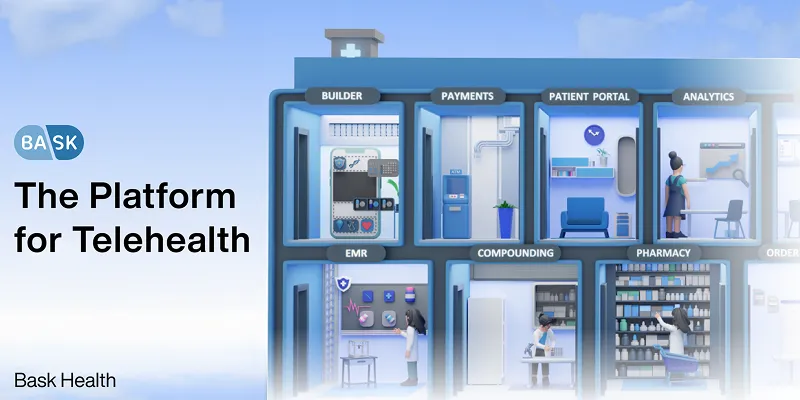
This is where Bask Health fits naturally. Not as a random brand insert, but as part of the broader point: telehealth growth requires systems thinking. A stronger promotion plan connects demand generation with channel strategy, privacy-aware measurement, conversion design, and downstream economics. That is the level where promotion stops being “campaign stuff” and starts becoming a growth asset.
How to Improve a Promotion Plan Right Now
The fastest way to improve a promotion plan is to stop treating promotion as a list of deliverables and start treating it as a decision system.
Start by auditing existing claims and message consistency. Look across ads, landing pages, emails, organic content, and lifecycle flows. Do they all tell the same story? Are benefits being described consistently? Are any claims becoming stronger as they move from one channel to another?
Then map every channel to a specific funnel role. SEO should not be judged like paid search. Paid social should not be judged like lifecycle email. Retargeting should not be expected to rescue unclear messaging. A promotion plan gets stronger when each channel has a defined job and a realistic success metric.
Next, review landing pages for expectation gaps. The landing page is where promotional ambition meets user reality. If it creates confusion, overstates the offer, or fails to explain the next step clearly, the promotion will produce lower-quality demand no matter how good the ads look.
Finally, tighten measurement before increasing spend. Decide which signals actually matter, which reporting can be aggregated, and where tracking or audience activation should be handled with extra caution. In telehealth, privacy-aware measurement is not a side note. It is part of the growth infrastructure.
Conclusion
A promotion plan for telehealth brands is not about making campaigns louder. It is about making demand generation clearer, more disciplined, and more connected to business reality.
The best promotion plans define what the brand can say, where each message belongs, how channels should work together, and how performance should be evaluated. They help teams grow without leaning on exaggerated claims, confusing users, or building fragile measurement systems.
Telehealth brands do not need more random campaign motion. They need promotion plans that support trust, protect acquisition quality, respect privacy-sensitive data environments, and create growth the business can actually keep.
References
- Federal Trade Commission. (2022, December). Health Products Compliance Guidance. U.S. Federal Trade Commission. https://www.ftc.gov/business-guidance/resources/health-products-compliance-guidance
- U.S. Food and Drug Administration. (n.d.). Office of Prescription Drug Promotion (OPDP). U.S. Department of Health & Human Services. https://www.fda.gov/about-fda/cder-offices-and-divisions/office-prescription-drug-promotion-opdp
- U.S. Department of Health & Human Services, Office for Civil Rights. (2024, June 26). Use of online tracking technologies by HIPAA-covered entities and business associates. U.S. Department of Health & Human Services. https://www.hhs.gov/hipaa/for-professionals/privacy/guidance/hipaa-online-tracking/index.html