Promotion is often treated like a volume lever. More offers, more urgency, more campaigns, more reminders, more pressure. In some categories, that approach can create short-term lift. In telehealth, it can backfire fast.
Telehealth brands are not just trying to get attention. They are asking people to trust a digital care journey, understand the next step, and engage with a service category that may involve sensitive decisions. That changes what a good promotional strategy looks like. The goal is not to push users into action at any cost. The goal is to build qualified demand with clarity, trust, and operational discipline.
A strong promotional strategy in telehealth does not rely on aggressive claims, pressure-based messaging, or messy data activation. It integrates value proposition, channel strategy, offer design, lifecycle communication, and privacy-aware measurement into a single demand-building system. It helps brands grow without weakening trust or attracting weak-fit demand that looks good in dashboards but performs poorly downstream.
This matters even more because the promotion of telehealth occurs in a privacy-sensitive environment. HHS has guidance on how HIPAA-regulated entities should think about online tracking technologies, and the FTC maintains health privacy guidance for businesses. State privacy requirements also continue to evolve, making disciplined data handling part of a growth strategy rather than a dusty compliance footnote on a shared drive.
Telehealth promotion should build confidence, not pressure. Push too hard, and the funnel starts attracting the wrong demand.
Key Takeaways
- Promotional strategy in telehealth should build qualified demand, not just short-term activity.
- Trust, message clarity, and expectation setting directly affect conversion quality.
- Risky growth tactics often create weak-fit demand, noisy attribution, and fragile acquisition economics.
- Telehealth brands need privacy-aware measurement, especially around tracking, audience activation, and health-adjacent user signals.
- Strong promotion connects acquisition, content, lifecycle messaging, retention, and business economics.
- Bask Health fits naturally into this conversation because durable growth in telehealth requires a system-level strategy rather than isolated campaign pushes.
What Promotional Strategy Means in Telehealth
Promotional strategy is the plan a brand uses to create demand, communicate value, and drive users to take action through coordinated campaigns and channels. In telehealth, that definition needs sharper edges.
Promotion is not just a discount, a launch campaign, or a seasonal offer. It is the way a telehealth company explains why its service matters, why the timing makes sense, and why the user can trust the journey ahead. That makes promotion deeply connected to brand messaging, patient acquisition, conversion design, and retention.
The difference between demand creation and demand manipulation matters here. Demand creation helps users understand value and make informed decisions. Demand manipulation relies on pressure, urgency, ambiguity, or emotional overreach to force action. In telehealth, that second path is especially dangerous because it can attract users with unclear expectations and weaken trust before the relationship even starts.
A strong promotional strategy gives every campaign a clear role. Some promotions educate. Some introduce the brand. Some recover qualified interest. Some support conversion. Some reinforce retention. The mistake is treating every promotion like a direct-response hammer. Not every user is a nail, and in telehealth, swinging harder is not exactly a personality trait worth scaling.
Why Promotional Strategy Matters More in Telehealth
Promotional strategy matters more in telehealth because trust is part of the conversion process. Users are not simply evaluating whether an offer is attractive. They are evaluating whether the company appears credible, whether the process is clear, and whether the next step is appropriate.
That means promotional messaging shapes user expectations before the funnel has a chance to prove itself. If the message is too broad, too urgent, or too vague, it may generate clicks while lowering lead quality. The business then has to absorb the downstream consequences: weaker conversion, more confusion, higher support volume, and retention that does not justify the acquisition cost.
Weak promotions attract weak-fit demand. This is one of the most expensive patterns in telehealth growth. A campaign can look efficient because it produces cheaper leads or lower acquisition costs. But if those users are acting on misunderstood expectations, the economics usually show the truth later. Cheap attention is not the same as useful demand.
Privacy-sensitive categories also need cleaner growth systems. Promotional strategy should not depend on collecting or activating more user data than the business can responsibly govern. HHS notes that tracking technologies can collect information about how users interact with regulated entities’ websites or apps, and that the FTC’s Health Breach Notification Rule applies to certain organizations that handle unsecured, individually identifiable health information outside HIPAA contexts.
That does not mean telehealth brands should avoid measurement. It means measurement needs to be intentional. Good promotion should be strong enough to work through clear positioning, controlled claims, and well-designed journeys, rather than relying on increasingly aggressive tracking to make the numbers look coherent.
The Core Components of a Strong Promotional Strategy
A strong promotional strategy in telehealth depends on several pieces working together. When one piece breaks, the campaign may still create activity, but the business usually pays for it later.
- Clear value proposition: The user should quickly understand what the brand offers, who it is for, and what the next step means. Vague promotion creates low-quality attention.
- Channel-specific messaging: A search ad, paid social creative, SEO article, email, and landing page should not say the same thing. They should support the same strategy through different user contexts.
- Offer design without pressure-based tactics: Promotions should create clarity and relevance, not panic. In telehealth, urgency and scarcity can easily distort expectations.
- Privacy-aware measurement: Tracking, attribution, and audience workflows should be purpose-limited and governed carefully, especially when health-adjacent behavior may be involved.
- Alignment with acquisition economics: A promotion is not successful just because it drives a spike. It has to support lead quality, conversion quality, retention, and payback.
How Telehealth Brands Build Demand Without Risky Tactics
Telehealth brands can build demand without leaning into aggressive or risky tactics. The stronger approach is slower to fake but much easier to trust.
Education-led promotion is one of the cleanest ways to build demand. Instead of pushing users, the brand helps them understand the category, the service model, and the path forward. This is especially useful when users are still comparing options or trying to understand whether telehealth fits their needs.
Trust-building content also supports promotion by reducing uncertainty before the conversion moment. Clear FAQs, process explanations, comparison pages, and expectation-setting content can make paid and organic channels work better. The brand is not just asking for action. It provides the user with enough clarity to take the next step with confidence.
Paid media can support demand creation when claims are controlled and expectations are clear. The goal should be relevance, not hype. Promotional creative should avoid sounding like a guaranteed outcome or a shortcut around user judgment. In telehealth, a creative that gets attention for the wrong reason is not a win. It is future churn wearing a cute outfit.
Lifecycle messaging can help users progress without turning every touchpoint into a hard sell. Email and related communication should reinforce clarity, answer common objections, and help qualified users understand what comes next. This is where promotional strategy becomes less about pushing and more about guiding.
Referral and retention programs can also support demand, but they need governance. A referral program should strengthen trust and fit, not create incentives that encourage low-quality sharing or misleading expectations. Retention-oriented promotion should reinforce value and engagement without making the user feel trapped in a funnel that refuses to take a hint.
Promotional Channels That Support Telehealth Growth
Different channels support promotion in different ways. The best telehealth brands do not ask every channel to do the same job.
SEO and content support durable demand by answering questions before users are ready to convert. This is where telehealth brands can build trust over time rather than relying solely on paid acquisition. Strong content also makes other channels more efficient because users arrive with better context.
Paid search supports high-intent demand capture. It works best when users already know what they are looking for and need a clear next step. Promotional strategy in search should focus on relevance, clarity, and alignment of expectations. Broad or overly promotional search messaging can attract traffic that looks useful but does not hold value.
Paid social supports demand creation. It introduces the brand to users who may not be actively searching yet. That makes it powerful for awareness and message testing, but risky when creative overpromises or attracts curiosity without fit. A smart paid social promotion should be judged by downstream behavior, not just click performance.
Email and lifecycle promotion support conversion and retention. These channels help users continue after the first touch, revisit the offer, and better understand the journey. In telehealth, lifecycle promotion is not just a revenue add-on. It often determines whether acquisition spend becomes more valuable over time.
Partnerships can enhance credibility and reach when aligned with the brand’s audience and positioning. A partnership should make the brand easier to understand and trust. If it only creates access to a larger audience without fit, it can become another volume trap.
Common Promotional Strategy Mistakes in Telehealth
The same mistakes tend to show up when telehealth brands treat promotion like a pressure machine instead of a trust-building system.
- Overusing urgency or scarcity: Pressure may lift short-term action, but it can also attract users with weak understanding or misaligned expectations.
- Making promotion sound like a medical promise: Promotional language should not drift into claims the brand cannot responsibly support.
- Optimizing for clicks rather than qualified demand: High engagement is not useful if it brings in poorly fit users.
- Using more tracking when messaging is the real problem: More measurement complexity will not fix weak positioning, unclear value, or broken expectations.
- Letting every channel promote a different story: Inconsistent messaging creates confusion and makes performance harder to interpret.
Why Telehealth Promotion Needs More Than Campaign Management
Telehealth brands rarely struggle because they cannot launch promotions. They struggle because promotions are disconnected from the rest of the growth system.
Campaigns can create demand, but demand is only useful when the business can support it. Promotional decisions affect acquisition quality, analytics, onboarding, support volume, retention, and payback. If those pieces are not connected, the team starts celebrating activity instead of business progress.
This is why promotional strategy needs operating discipline. A campaign should not be judged only by how much traffic it drives or how cheaply it converts. It should be judged by whether it attracts the right users, sets the right expectations, and supports a journey the business can actually sustain.
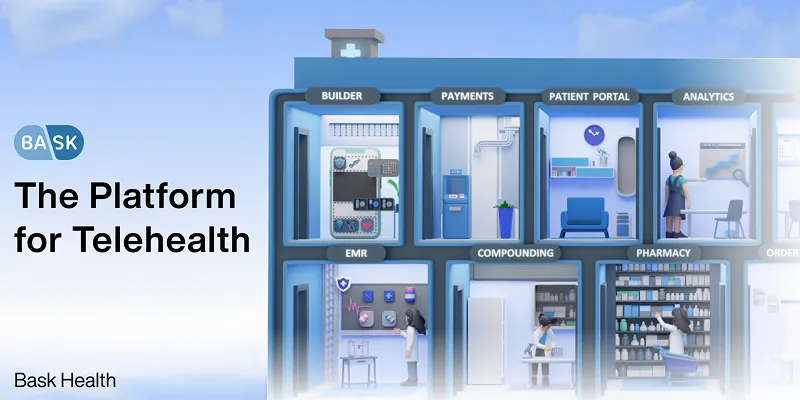
A partner like Bask Health fits naturally here because telehealth growth is rarely solved by one better campaign. It usually requires a stronger system: clearer positioning, better channel alignment, privacy-aware measurement, conversion paths that reduce confusion, and economics that hold after the first conversion event. That is the level where promotion stops being noise and starts becoming strategy.
The real questions are not “What promo should we run?” or “How do we get more clicks?” They are sharper than that. Which promotional messages create strong-fit demand? Which channels build trust rather than just reach? Where do users become confused? Which campaigns improve durable value rather than front-end volume? Those are operator questions, and they are the questions that matter.
How to Improve a Promotional Strategy Right Now
The fastest way to improve promotional strategy is not to create more campaigns. It is to clean up the logic behind the campaigns already running.
Start by auditing promotional messaging across channels. The website, landing pages, paid ads, organic content, email flows, and retargeting messages should not feel like five departments wrote them, trapped in a different group chat. They can adapt to the channel context, but they should support a single clear value story.
Then identify where expectations become misaligned. Look for moments when a campaign generates interest, but the next step is confusing. That gap often explains weak conversion quality better than media performance does. Many promotional problems are not traffic problems. They are expectation problems with a media budget.
Review measurement for both business usefulness and privacy discipline. Telehealth brands should understand which promotional efforts support qualified demand, but they should avoid building measurement systems that depend on unnecessary data collection or risky audience activation. The IAPP tracker shows that state privacy laws continue to change, so brands need flexible governance rather than a static playbook.
Finally, fix one risky or weak promotional habit before scaling. It may be overuse of urgency. It may be vague claims. It may be inconsistent messaging between paid social and landing pages. It may be reporting that rewards cheap conversions without checking downstream quality. Clean that up first. Then decide whether the campaign deserves more budget.
Conclusion
Promotional strategy in telehealth is not about pushing harder. It is about building demand with enough clarity, trust, and discipline for the business actually to sustain the growth it creates.
The best telehealth promotions do not manipulate urgency or chase cheap attention. They explain value clearly, set expectations honestly, support privacy-aware measurement, and connect to the broader acquisition system. That is how brands build demand without risky growth tactics.
For telehealth operators, the real goal is not more promotional activity. It is a better promotional judgment. The brands that win will not be the ones shouting the loudest. They will be the ones who communicate clearly, measure carefully, and build demand that still looks good after the dashboard glow wears off.
References
- International Association of Privacy Professionals. (2019, April 18). US State Privacy Legislation Tracker. IAPP. https://iapp.org/resources/article/us-state-privacy-legislation-tracker
- Federal Trade Commission. (n.d.). Health Breach Notification Rule. U.S. Federal Trade Commission. https://www.ftc.gov/legal-library/browse/rules/health-breach-notification-rule
- Federal Trade Commission. (n.d.). Health privacy. U.S. Federal Trade Commission. https://www.ftc.gov/business-guidance/privacy-security/health-privacy
- U.S. Department of Health & Human Services, Office for Civil Rights. (2024, June 26). Use of online tracking technologies by HIPAA covered entities and business associates. U.S. Department of Health & Human Services. https://www.hhs.gov/hipaa/for-professionals/privacy/guidance/hipaa-online-tracking/index.html