Telehealth companies often treat their websites as design projects. Pages get refreshed. Layouts get modernized. Visuals improve. On the surface, everything looks cleaner. But performance stays inconsistent. Conversion rates fluctuate. Users still hesitate.
That is because the issue is rarely visual. It is structural.
A website is not just a collection of pages. It is a system that should guide users from first interaction to meaningful action. When that system is unclear, no amount of design improvement fixes the underlying problem. The site may look better, but it does not work better.
A strong web strategy in telehealth is not about aesthetics. It is about patient flow. It defines how users move, how decisions are made, and how friction is reduced across the journey. In a category where trust and clarity matter more than speed, that structure determines whether a website supports growth or quietly undermines it.
Most telehealth websites do not fail because they look bad. They fail because users do not know what to do next.
Key Takeaways
- A web strategy defines how users move through the experience, not just how pages look
- Most telehealth websites underperform due to unclear patient flow, not poor design
- Strong structure improves conversion without requiring more traffic
- Messaging, content, and conversion paths must align across all entry points
- Privacy-aware design matters when guiding users through sensitive decisions
- The best websites reduce friction and support confident user progression
What Web Strategy Means in Telehealth
A web strategy is often reduced to layout, navigation, and visual hierarchy. Those elements matter, but they are not the core of the system.
At its core, a web strategy defines how users move through the experience. It determines where they enter, what they understand at each step, and how they decide what to do next. In telehealth, that movement is rarely linear. Users arrive with varying levels of awareness, concerns, and expectations.
This is why a website should be treated as a patient flow system, not a static interface.
A page is not just an endpoint. It is part of a sequence. It should help users interpret information, reduce uncertainty, and move forward with clarity. When pages are designed in isolation, that sequence breaks. Users encounter friction not because the content is wrong, but because the path is unclear.
A strong web strategy ensures that each page has a role in the journey. It connects entry points to decision paths. It creates continuity across the experience. It helps users understand what comes next without forcing them to search for it.
Why Most Telehealth Websites Underperform
Most telehealth websites are built incrementally. New pages are added over time. Campaigns create landing pages. SEO adds educational content. Product updates introduce new sections. Each addition may make sense on its own, but the system as a whole becomes fragmented.
Pages are built in isolation instead of as part of a journey. Messaging differs slightly across sections. Calls to action compete rather than align. Users land on a page and are presented with multiple possible directions, none of which are clearly prioritized.
This creates hesitation. Users pause, evaluate, and often leave.
Another common issue is the disconnect between messaging and conversion paths. Content may clearly explain a service, but the transition to action feels abrupt or unclear. Users understand the value but are unsure how to proceed.
Design improvements rarely solve this. A cleaner layout may reduce visual friction, but it does not fix structural confusion. If the path is unclear, a better design only makes the problem look more polished.
The Core Components of a Strong Web Strategy
A strong web strategy aligns structure, messaging, and movement.
- Patient flow definition: Map how users move from first touch to action. Identify entry points and expected paths.
- Intent-based page structure: Build pages around what users need to understand at each stage, not just what the business wants to present.
- Messaging alignment: Ensure consistency across landing pages, content, and conversion points.
- Friction reduction: Remove unnecessary steps, competing actions, and unclear transitions.
- Privacy-aware pathways: Design flows that respect user information sensitivity and avoid unnecessary complexity in data capture.
This is not about adding features. It is about removing confusion. A clear structure makes every part of the website more effective.
How Web Strategy Supports Telehealth Growth
When patient flow is clear, performance improves across the system.
Conversion improves without increasing traffic. Users understand what to do and why it matters. They move forward with less hesitation. The funnel becomes more efficient as the input strengthens.
Channel performance also improves. Paid campaigns send users to pages that match their intent. SEO traffic finds content that leads somewhere meaningful. Messaging becomes more consistent when supported by structure.
Lead quality improves as well. Users who follow a clear journey arrive with higher expectations. They are more aligned with the experience they are entering, which reduces friction later in the process.
There is also a trust effect. When users understand the path clearly, they feel more confident. In telehealth, that confidence is critical. It influences not just conversion, but continued engagement.
Common Web Strategy Mistakes in Telehealth
- Designing pages without defining how users move between them
- Treating each page as a final destination instead of part of a journey
- Overloading users with too many choices at key decision points
- Prioritizing aesthetics over clarity and usability
- Ignoring how users actually navigate the experience
These mistakes are subtle. They often go unnoticed because individual pages appear functional. The issue only becomes clear when looking at how users move across the entire system.
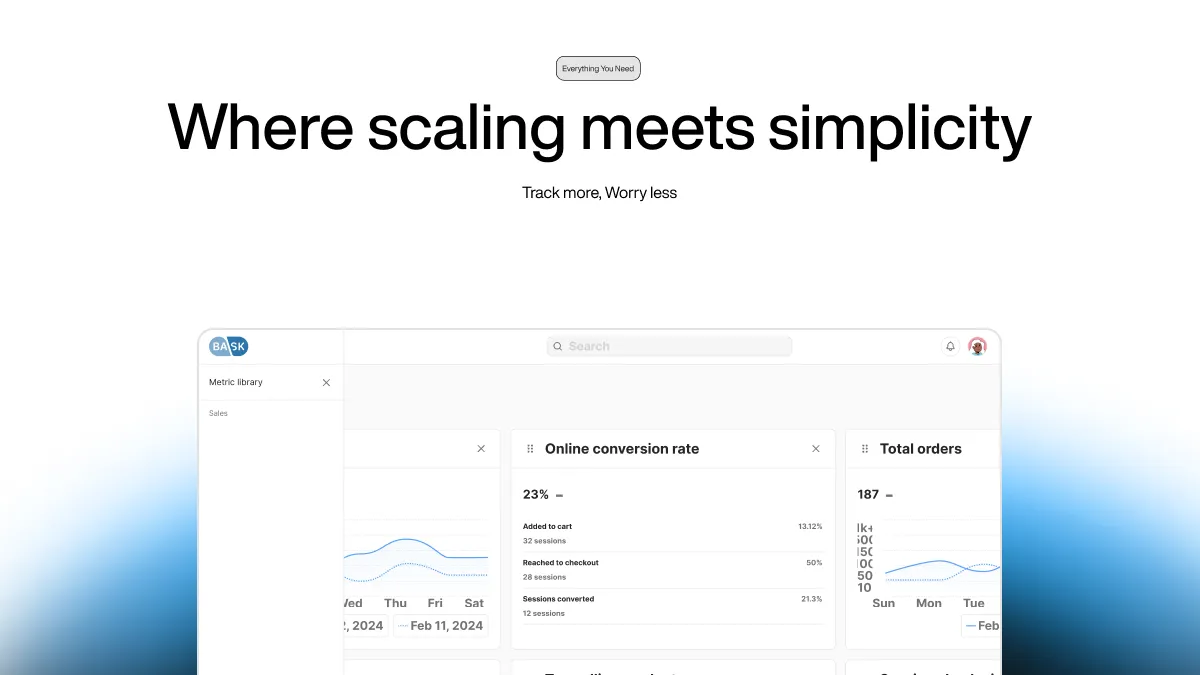
Why Web Strategy Is a System Design Problem
A website sits at the center of telehealth growth. It connects content, paid acquisition, messaging, and conversion.
If those elements are not aligned, the website becomes a bottleneck. Traffic arrives, but movement slows. Users engage, but do not progress. The system generates activity without producing consistent outcomes.
This is why web strategy cannot be treated as a standalone function. It is part of a broader system that includes how users are acquired, informed, and moved forward.
This is also where platforms like Bask Health fit into the conversation. Not as design solutions, but as systems that help align user movement across the experience. When the website supports a clear flow, every other part of the growth system becomes easier to manage.
How to Improve Your Web Strategy Right Now
Improving a web strategy does not start with a redesign. It starts with understanding movement.
Begin by mapping the current patient flow. Identify where users enter, where they hesitate, and where they drop off. This reveals structural issues that are not visible at the page level.
Next, simplify decision points. Reduce competing actions. Make the next step clear and consistent across pages.
Then fix one transition at a time. Instead of redesigning everything, focus on improving how users move between key stages.
Finally, align messaging with the flow. Ensure that what users read matches what they are asked to do next.
Clarity compounds. Small structural improvements often produce larger results than full redesigns.
Conclusion
Telehealth websites do not need to look better.
They need to work better.
A strong web strategy focuses on how users move, not just how pages appear. It reduces friction, improves clarity, and supports better decisions across the journey.
The goal is not design.
The goal is flow.
References
- National Institute of Standards and Technology. (n.d.). Privacy Framework. U.S. Department of Commerce. https://www.nist.gov/privacy-framework
- Federal Trade Commission. (2024, August). Collecting, using, or sharing consumer health information? Look to HIPAA, the FTC Act, and the Health Breach Notification Rule. U.S. Federal Trade Commission. https://www.ftc.gov/business-guidance/resources/collecting-using-or-sharing-consumer-health-information-look-hipaa-ftc-act-health-breach
- U.S. Department of Health & Human Services, Office for Civil Rights. (2024, June 26). Use of online tracking technologies by HIPAA-covered entities and business associates. U.S. Department of Health & Human Services. https://www.hhs.gov/hipaa/for-professionals/privacy/guidance/hipaa-online-tracking/index.html